Fuel is one of the largest expenses for businesses that rely on vehicles. Whether you manage a delivery team, a service fleet, or just want to simplify employee fuel spending, the right fuel card can save money and give you more control.
In this guide, I reviewed the top business fuel cards for 2025. I compared each card on savings, coverage, fees, and features to help you decide which one best fits your company.
Here are my top six picks:
Best fuel cards at a glance
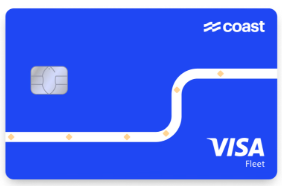
Coast Fuel Card: Best for flexible, controlled fleet spending
 |
|
|---|---|
Pros
|
Cons
|
Card details
Welcome offer
Features
|
|
Why I like it
The Coast Fuel Card is my top overall pick because it offers both flexibility and control. Unlike brand-only cards, it works at nearly any station that accepts Visa, so your drivers do not have to go out of their way to fill up. What really makes it stand out are the built-in controls. You can set purchase limits, block nonfuel spending, and track every transaction in real time.
Coast also backs its card with a fraud protection guarantee that covers up to $25,000 annually. While the $4 active card fee adds up, many fleets find that the savings, oversight, and reporting features outweigh the cost.
Other benefits
- Simple, transparent pricing with no hidden fees
- Rewards that apply to both fuel and nonfuel expenses
- No personal credit checks or guarantees required
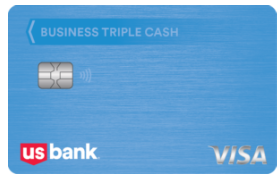
U.S. Bank Triple Cash Rewards Visa® Business Card: Best for cash-back rewards on everyday business purchases
 |
|
|---|---|
Pros
|
Cons
|
Card details
Welcome offer
Rewards
Features
|
|
Why I like it
I like this card because it offers solid rewards in categories most businesses already spend on, such as fuel, utilities, and office supplies. It has no annual fee, which makes it cost effective for budget-restricted teams.
The 0% intro APR on purchases and balance transfers gives some breathing room for larger expenses, and the $100 software subscription credit adds extra value if you use accounting or business tools. While it does not include fleet-specific features like driver limits or fuel-only controls, it is a versatile card that combines good rewards with broad usability.
Other benefits
- Multiple redemption options, including statement credits, deposits to a U.S. Bank account, or Real-Time Rewards
- Accepted at any gas or EV station that takes Visa
The U.S. Bank Triple Cash Rewards Visa® Business Card is also one of our top picks for the best business credit cards.
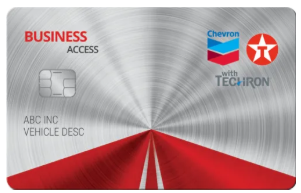
Chevron Texaco Business Access Card: Best for loyal Chevron/Texaco fleets needing strong controls
 |
|
|---|---|
Pros
|
Cons
|
Card details
Welcome offer
Features
|
|
Why I like it
I like the Chevron Texaco Business Access Card because it gives fleets the flexibility to fuel outside the brand while still rewarding loyalty at Chevron and Texaco. You get rebates up to 6¢ per gallon at brand stations, and you do not lose access just because your drivers go off network.
The control tools, driver IDs, and reporting make it practical for managing misuse. Combining that with no card or annual fees makes it a solid option for fleets that want control, rebates, and wide coverage in one package.
Other benefits
- Captures fuel and nonfuel vehicle expense data to simplify accounting
- Mobile app gives managers access to status, driver IDs, and transaction filters
- Program administered by WEX, known for fleet support and service
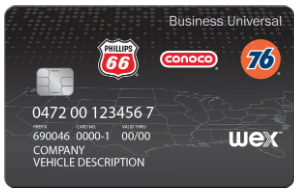
Phillips 66® Conoco® 76® Business Universal Card: Best for nationwide fleets that want brand rebates
 |
|
|---|---|
Pros
|
Cons
|
Card details
Welcome offer
Rewards
Features
|
|
Why I like it
I like this card because it offers both broad coverage plus brand loyalty rewards. You can fuel almost anywhere and still get top rebates when using Phillips 66, Conoco, or 76 stations. The controls and reporting tools help you keep fuel expenses under control.
The six-month 10¢ per gallon promo is a strong incentive for switching fleets. It may not maximize savings on every fill, but it makes sense for businesses that span multiple service territories and still want to benefit from brand discounts.
Other benefits
- No card fees or setup fees
- Full accounting support built in
- Works with any fuel station while still rewarding brand usage
Shell Card Business: Best for rebates and management at Shell stations
 |
|
|---|---|
Pros
|
Cons
|
Card details
Welcome offer
Rewards
Features
|
|
Why I like it
I like the Shell Card business offering because it blends rebate potential with solid control tools and wide acceptance. For fleets that already use Shell often, the tiered rebates can add meaningful savings. The Flex version broadens acceptance so drivers are not confined to Shell stations.
I also appreciate how Shell bundles maintenance discounts, reporting, and fuel controls into one card. While the rebates are limited to Shell stations, the features and oversight make it worth considering for businesses that want a single card to cover fuel, EV charging, and services under one roof.
Other benefits
- 24/7 customer service and support
- Fleet management via mobile apps and online dashboards
- Fraud alerts, security controls, and instant card suspension capabilities
- Rebate and billing transparency with clear tier structures
- Helps with mixed fleets, including EV, fuel, parts, and roadside services
Ramp Corporate Card: Best for automated spend control and no personal guarantee
 |
|
|---|---|
Pros
|
Cons
|
Card details
Welcome offer
Features
|
|
Why I like it
Ramp is great for businesses that want tighter control over fuel and other operating costs. You can issue virtual or physical cards for each driver or vehicle, set limits by vendor or category, and track every transaction in real time to prevent misuse.
The built-in controls help stop overspending before it happens, and there’s no personal guarantee, which keeps business and personal finances separate. While it doesn’t offer fuel rebates, its automation and visibility make it a smart option for managing fleet expenses efficiently.
Other benefits
- Accepts both physical and virtual cards
- Automates expense classification and syncs with financial software
- You can scale easily as your team grows
Methodology
When reviewing the top business fuel cards, I focused on features that deliver real value to companies that rely on vehicles for daily operations. The goal was to highlight cards that not only reduce fuel costs but also make it easier to control spending and manage expenses across different types of fleets.
Fuel savings were a primary factor, especially cards offering per-gallon rebates or consistent cash back on fuel purchases. I also considered the difference between brand-specific discounts and universal acceptance, as coverage can be an important factor.
Costs were another important area. I looked at annual fees, per-card charges, and hidden service fees, prioritizing cards that keep expenses predictable while still offering strong rewards or controls.
I also evaluated tools that help streamline operations, such as driver-level spending controls, fraud alerts, real-time reporting, and integrations with accounting or fleet management software. These benefits can save time and reduce the risk of misuse, extending the card’s value beyond simple discounts.
Accessibility mattered too. I gave attention to approval requirements like credit checks, personal guarantees, and minimum business history, ensuring that the recommended cards are realistic options for small businesses as well as larger fleets.
All findings are based on publicly available information from card issuers and trusted financial sources. Because terms and offers can change, it’s best to confirm the latest details with the provider before applying.
Choosing the right fuel card for your business
Choosing the right business fuel card means looking closely at how your company buys and manages fuel. The best card for one business may not be the right fit for another. Here’s how to make the smartest choice:
- Understand your fueling habits. Look at where your drivers usually stop for gas, how many gallons you purchase each month, and whether you travel locally or nationwide. A brand-specific card may deliver the best discounts if your routes stick to one chain, while a universal fleet card may be better if your drivers use multiple stations.
- Decide between rebates and cash back. Some cards give per-gallon discounts at the pump, while others offer cash back on fuel purchases. Per-gallon savings are easier to see right away, while cash back may give you more flexibility if you also want rewards on nonfuel business expenses.
- Evaluate controls and reporting tools: One of the biggest benefits of fuel cards is the ability to track spending and set rules. Check whether the card lets you block nonfuel items, set daily or weekly limits, and generate detailed reports. Stronger controls can save money and reduce misuse.
- Compare fees and costs: Many fuel cards advertise no annual fee but may charge per-card fees, network fees, or late payment penalties. Add these up against your expected savings. In some cases, the savings outweigh the fees; however, in others, a lower-cost card may be the smarter move.
- Look at coverage: Wide acceptance matters if your drivers travel long distances or across regions. A card that is only accepted at one brand may not be helpful if your drivers often need to stop at other stations. Check station maps and coverage lists before signing up.
- Check approval requirements: Some providers require a personal guarantee or a strong credit profile, while others only require your business EIN. Make sure your business qualifies before applying to avoid unnecessary credit pulls.
By considering these factors, you can choose a fuel card that not only lowers your fuel costs but also gives you the right level of control, flexibility, and coverage for your business.
Frequently asked questions (FAQs)
Is a fuel card better than a regular business credit card for gas?
If you buy a lot of fuel, a fuel card usually proves more helpful. You get per-gallon savings, controls, and clean reports. If your fuel spend is modest, a $0-fee rewards card with a gas category can be enough.
Can fuel cards help build business credit?
Many report to commercial credit bureaus. On-time payments can help your business credit profile. Check reporting details before you apply.
Will a fuel card lock me into one gas brand?
Brand cards often give the biggest discounts at their stations. Universal cards trade a little discount for much wider acceptance. Pick based on your routes.
Do fuel cards cover EV charging?
Some do. Read the terms to confirm EV stations are included as an eligible category or merchant type.
What controls can I set for drivers?
Depending on the card and provider, you can often set daily or weekly limits, block nonfuel items, require PINs, restrict by time or location, and get real-time alerts for risky transactions.
What fees should I watch for?
Common fees include per-active-card fees, paper statement fees, and certain network or service fees.
Source of Article